Book 9, AI Purple: The Loop
This chapter gathers what AI Purple (Book 9) establishes about Hansa Mutual: the organisation that runs the loop between red and blue, its scenario library and continuous pipeline, the seven agent mandates, the independence statement that moved two cells to failed, coverage as a claim with an age, and the board's question whether continuous automated red teaming makes the quarterly purple session redundant. It draws on the volume's purple profile, its ledger of facts, its chapters 1 to 29 and its Appendix A. The volume's year is January to April 2028, and everything in it is illustrative fiction; where the ledger and a chapter disagree, the volume says the ledger wins.
The volume in brief
AI Purple takes the loop between the red team and the blue team as its subject and asks what happens when AI sits on both sides of the table. Its thesis has five parts. Purple is a loop, not a team. AI moves the loop from the event to the pipeline and keeps the event. A loop closed by machines alone verifies nothing new, so verification needs independence between the side that tests and the side that is tested (the independence principle). Coverage is a claim that needs evidence. Safe and legitimate emulation is a design question settled in a signed rules-of-engagement manifest enforced outside the agent. The loop has five stages: P1 Target, P2 Emulate, P3 Observe, P4 Improve and P5 Verify. Level 4 is never used for an emulation action that is irreversible, that leaves the signed scope, that touches personal data beyond what the exercise is authorised to touch, or that targets a named person (9, Nordqvist, 2026).
The role of Hansa Mutual in the volume
Hansa Mutual is the organisation that runs the loop. It has a group red team of five led by Mareike Hartmann, a detection engineering team of four led by Lena Vogel, the group SOC of about 38, a scenario library of 86 scenarios (87 after SCN-HM-0087), a continuous pipeline HM-SEC-004 running S1 scenarios, quarterly purple sessions, an annual human-led exercise and a threat-led penetration test (TLPT) under TIBER-DE (illustrative). The lever is the pipeline and the repository. The risk is a loop that runs without anyone questioning it (AI Purple, Chapters 1 and 2) (9, Nordqvist, 2026).
The board's question is AIDR-0850 (2028-01-18): does continuous automated red teaming make the quarterly purple session redundant? The answer, AIDR-0891 (2028-04-28), is no. The session of 2028-03-09 produced five findings, three of which the pipeline alone had not produced. The pipeline gives cadence, with 31 of 34 priority techniques exercised within 30 days, but it generalises worse: 90 per cent on known shapes and 71 per cent on held-out scenarios, a gap of 19 points. The conclusion, AIDR-0896, is that a run loop is as good as its independence and its stop (AI Purple, Chapters 11, 25 and 28) (9, Nordqvist, 2026).
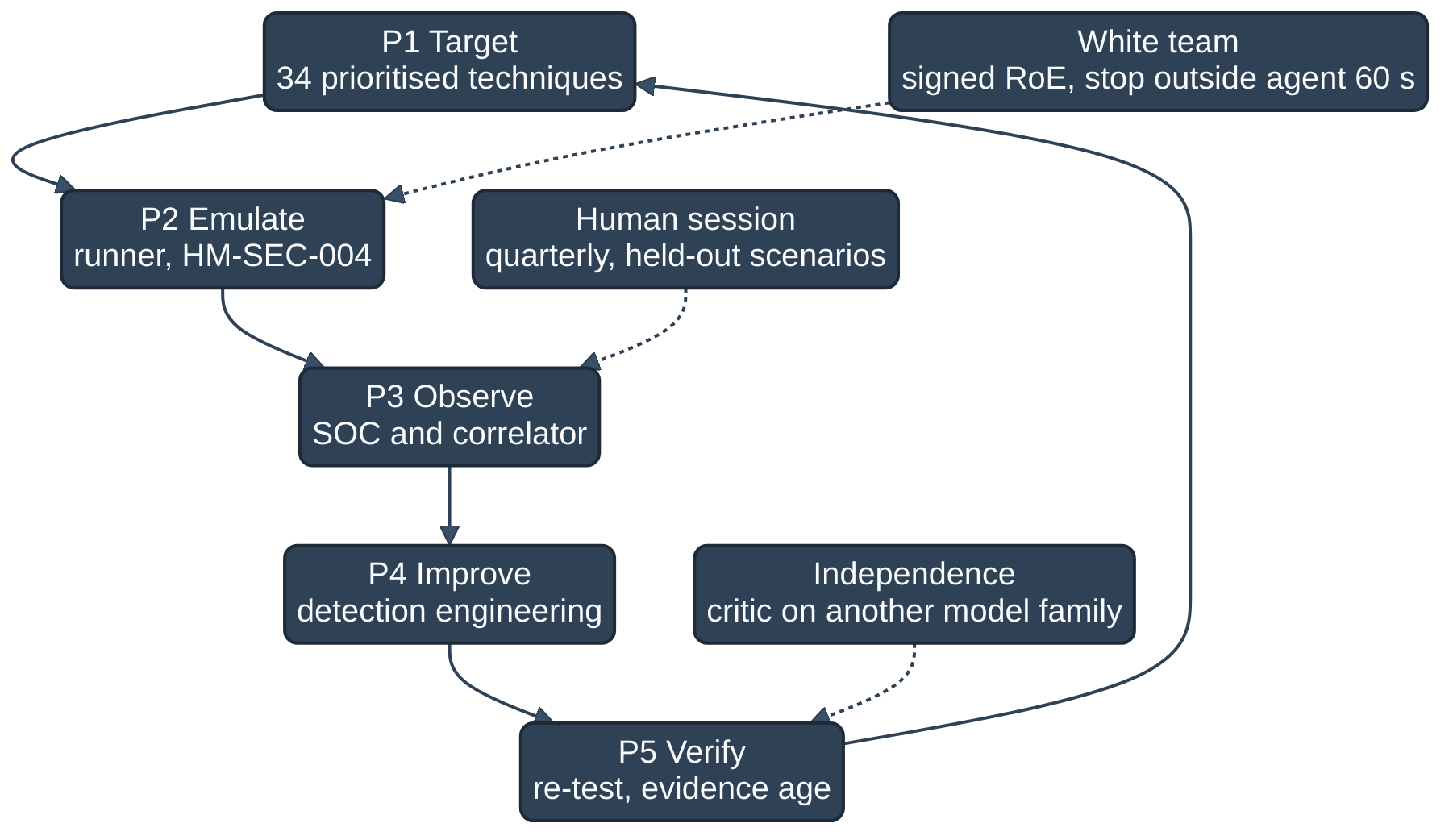
Figure 15.1: The purple loop at Hansa Mutual (illustrative, as at April 2028).
What the volume establishes
Teams and tooling
The group red team has five people, and the threat intelligence cell has three. A breach-and-attack-simulation tool runs atomic tests weekly. The cadence rules are that every priority technique is exercised at least every 30 days and after a change to a detection, connector or mandate; evidence expires after 90 days for priority techniques and 180 days for others; independence and coverage claims for priority agents last 90 days (AI Purple, Chapters 2, 4, 5 and 11) (9, Nordqvist, 2026).
Two earlier agents frame the loop. HM-SEC-004 (AIDR-0314) is continuous automated red teaming of the group's estate from the red team range, using benign catalogued emulations with no path into blue tooling except through findings. HM-SEC-003 (AIDR-0313) is AI red teaming of the claims assistant, the claims-triage agent and the IT-operations agent. The rules of engagement are RoE-HM-2027-PURPLE (chaired by the white team lead), RoE-HM-2027-TLPT for the German entity under TIBER-DE, RoE-HM-2027-SOC-01 (2027-05-18, from AI Blue) and RoE-HM-2028-001 (AI Purple, Chapters 2 and 6) (9, Nordqvist, 2026).
The scenario library
| Class | Count (86 scenarios) | Meaning |
|---|---|---|
| S1 | 41 | Benign, catalogued; can run continuously at Level 3 within scope |
| S2 | 19 | Level 2 at most |
| S3 | 18 | Maximum Level 2 (the ledger's correction) |
| S4 | 8 | Involves staff or a third party; range only; Level 0; any social-engineering scenario is S4 |
The classes are in SCT-HM-2027-01 version 1.0.0; after SCN-HM-0087 the total is 87. The library has at least one scenario for each of the 34 priority techniques. The held-out set is SCN-HM-0074 to SCN-HM-0086 (13 of 86; 13 of 87, 14.9 per cent); the rule is at least 15 per cent and at least eight scenarios, and an expansion to 20 has been requested on the AIDR-0868 side but not decided. Scenarios the volume names are SCN-HM-0007 (a chapter 5 example, S1), -0031 (T1098.001, S1, run by HM-SEC-004), -0035 (T1078 with T1021.001, S2, human-run, TLPT wave 2, seeds S-03 and S-04), -0044 (T1087.002 with T1046, S1), -0046 (T1021.002, S1, seed S-07), -0052 (AML.T0051 against the claims assistant, S2), -0058 (the claims-triage agent's market-binding refusal, ATLAS AML.T0053 family), -0063 (a T1110.003 variant from the curator) and -0087 (a curator draft accepted in February 2028). No S4 scenario against staff had run by the end of the quarter (AI Purple, Chapters 5, 6 and 8) (9, Nordqvist, 2026).
The agent team of the loop
AIDR-0854 (2028-02-15) adopts DLG-HM-EMU-01 and seven mandates for eight functions, version 1.0.0, reviewed on 2028-05-15 and expiring 2029-02-15. The profile had said four agents (MND-HM-EMU-01 to -04) and marked this as indicative; the volume's Chapter 14 and ledger fix seven.
| Mandate | Role | Mode | Level and limits |
|---|---|---|---|
MND-HM-EMU-01 |
Runner | 5 | Level 3 for S1 within scope; Level 2 for S2 and S3; none for S4; 40 actions and five targets per run, 8 runs a day, 30 minutes a run, EUR 4,500 a month (EUR 54,000 a year) |
MND-HM-EMU-02 |
Curator and planner | 4 | Level 1 |
MND-HM-EMU-03 |
Observation correlator | 4 | Level 1 |
MND-HM-EMU-04 |
Critic | 4 | Level 0, a second model family |
MND-HM-EMU-05 |
Finding triager | Level 1 | |
MND-HM-EMU-06 |
Re-test runner | 5 | Level 3 for S1 regression cases |
MND-HM-EMU-07 |
Detection drafter (HM-SEC-002 under another mandate) |
5 identity | Level 1, pull requests only |
No agent changes production detections. The SOC agents (HM-SEC-001, -002, -006, -007) are tested by the loop but are not part of it. The stage profile DLG-HM-LOOP-01 (AIDR-0852, in force 2028-03-15) and the function profile DLG-HM-EMU-01 coexist. The freeze rule is that Level 3 freezes for a class when seeded-gap catch falls below 0.80; a level is raised only at 0.90 over four quarters; and the held-out gap trigger is 10 points (AIDR-0889). The runner's Level 3 for S1 is tied to two operators holding competence EE-02 without assistance, four of five having it (AIDR-0885, 2028-04-11). The stop target for the runner is 60 seconds (revocation 60 seconds, tokens at most 10 minutes); the generic default and the HM-SEC-001 target are 120 seconds (AI Purple, Chapters 14 and 15) (9, Nordqvist, 2026).
Representation, law and findings handling
KBV-IT-2024-SOC-05 requires prior notice to the Konzernbetriebsrat (chair Thomas Brandt) and the Polish and Swedish representatives for exercises involving staff, aggregate results and no result in any assessment, and covers the red team and detection engineering as well. The annual notice class is AIDR-0878 (2028-03-20) and the standard template runs ten working days (AIDR-0883). The legal frame is DORA for the German entity (including TLPT, Article 24(4) on independence, Article 24(5), Article 26(8) on external testers at every third test, and Article 28(1)(a)), TIBER-DE, the seven regimes, and DORA third-party risk for every testing and simulation service. UK and Swiss managed detection needs the provider's consent, and UK and Swiss telemetry follows transfer rules. The hold list HLD-HM-TLPT-01 is filled only by the control team lead (AIDR-0877); the internal red team's status is not invoked for sessions or the pipeline because they are not TLPT; an external provider will be contracted for the next TLPT. The volume's term is white team; control team is the TIBER and DORA term. Findings are handled under POL-HM-FND-01 (AIDR-0853), which has four classes (FC-1 Aggregate, FC-2 Redacted, FC-3 Restricted, FC-4 Exploitable), a store segregated from the scenario repository and the SOC platform, hosted models limited to FC-1 and FC-2, and the gap list of nine unverified techniques held in FC-4 (AI Purple, Chapters 16, 19, 21 and 23) (9, Nordqvist, 2026).
People
Mareike Hartmann (head of the group red team, Hamburg) owns the human-led campaigns, writes new scenarios, reviews AI-proposed scenarios (6 of 17 curator drafts accepted, 11 rejected, 7 of them duplicates), authors the held-out set, co-owns the scorecard SCR-HM-2028-Q1 and owns LP-HM-RED-2028-01 (AIDR-0884). Lena Vogel (head of detection engineering) signs closure, wrote the re-test REG-HM-0032, merged DET-HM-0612 and re-tested seven cells at the independence review. Sofia Keller, an investigation lead from the Hamburg SOC, is purple team coordinator full time from 2028-03-01 (ROLE-HM-SEC-PRP, AIDR-0871), reports to the head of detection engineering with direct access to the group CISO when the register's age passes twice the target, and has a deputy in detection engineering's duty lead; the volume calls the role under strain. The profile had left Hansa Mutual's coordinator unnamed; Chapter 19 names Keller. The white team lead (unnamed, senior in the group CISO's office, with a deputy) sits outside the red team and the SOC. Others are the group CISO (authority for risk acceptance), the head of security operations, the chief risk officer and chair of the group AI governance board (reviewers in AIDR-0850), closure owners per class, and the Polish and Swedish representatives (AI Purple, Chapters 2, 5, 11, 19, 20, 23, 24 and 27) (9, Nordqvist, 2026).
Decisions and records
| Record | Date | Subject |
|---|---|---|
AIDR-0850 |
2028-01-18 | The board's question |
AIDR-0851 |
2028-02-08 | Re-ranking of the 34 techniques; THR-HM-02 the main input; five techniques change tier; T1486 and T1490 move to tier 1 |
AIDR-0852 |
2028-02-15 | Five finding states mapped to stages; DLG-HM-LOOP-01 exposes P5 as the weakest stage |
AIDR-0853, AIDR-0854 |
POL-HM-FND-01; DLG-HM-EMU-01 and the mandates |
|
AIDR-0855 |
2028-02-09 | Routing of FND-HM-2028-007 |
AIDR-0856 |
2028-02-22 | IND-HM-2028-Q1, valid to 2028-05-22 |
AIDR-0862 |
2028-02-12 | DET-HM-0561 |
AIDR-0863 |
2028-01-24, updated 02-09 and 03-13 | Level of HM-SEC-001 session revocation |
AIDR-0864, AIDR-0865 |
2028-03-14; 2028-03-28 | Heat map to coverage records; 90-day expiry in the status rule |
AIDR-0867, AIDR-0868 |
2028-03-13; 2028-04-04 | Board page replaces scenarios run and pass rate; first LPG-HM-2028-Q1 |
AIDR-0870 to AIDR-0874 |
February to April 2028 | Operating model; ROLE-HM-SEC-PRP; "the author of a change never closes it"; DRF-HM-LOOP-01 1.0.0 (in force 2028-03-15); version 1.1.0 (2028-04-05, match time 5 minutes for pipeline runs) |
AIDR-0875 |
2028-03-16 | Risk acceptance of the Swiss audit-log gap FND-HM-2028-011 (T1098.001), 90 days to 2028-06-14 |
AIDR-0876, AIDR-0877, AIDR-0878 |
OBL-HM-2028-01; HLD-HM-TLPT-01; notice class |
|
AIDR-0879 to AIDR-0884 |
Industry group SHP-HM-2028-01 (14 members, TLP); 0880; CNP-HM-2028-01; SCR-HM-2028-Q1; 0883; LP-HM-RED-2028-01 |
|
AIDR-0885 |
2028-04-11 | Runner Level 3 for S1 tied to two operators with EE-02 |
AIDR-0887, AIDR-0888 to AIDR-0890 |
2028-04-24; 2028-04-14 | HZN-HM-PL-01; cells show their age and turn yellow at expiry; freeze and trigger rules |
AIDR-0891 |
2028-04-28 | The answer to the board |
AIDR-0892 |
2028-04-27 | Independence action: planner and curator to a second model family by 2028-07-31 |
AIDR-0893, AIDR-0894, AIDR-0896, AIDR-0898, AIDR-0899 |
Conclusions, target levels and PLAN-HM-LOOP-2028 |
Earlier records are AIDR-0027, AIDR-0024, AIDR-0311, AIDR-0313, AIDR-0314, AIDR-0737, AIDR-0794 and AIDR-0778. Findings are FND-HM-2027-031 (a policy refusal reached no alert, giving DET-HM-0561), FND-HM-2028-001 (restraint failure of HM-SEC-001), -002 (seeded gap SGP-HM-2028-003), -003 and -004 (held-out re-tests failed), -005 (an FC-2 example), -007 (T1098.001 from SCN-HM-0031), -008 (a preventive control blocked by ROT-12), -011 (the Swiss audit log) and -012 (the BAS collector stored the exercise account's token in a local log, T1552.001). Detections are DET-HM-0201 (retired), -0388, -0455, -0561 and -0612; regression cases REG-HM-0031 (A and B), -0032 and -0112; further records COV-HM-0112, EVD-HM-2028-0118 and -0121, EMU-HM-2027-02 (TLPT wave 2), EMU-HM-2028-03, PRP-HM-2027-04, PRP-HM-2028-01, DCY-HM-2028-01, CHG-HM-5521, CHG-HM-2028-007, MSC-LOOP-01, TTX-HM-2027-Q3-01, TTX-HM-2028-01, AP-HM-LOOP-01 to -05, LOOP-CF, TFR-HM-01 and PLAN-HM-LOOP-2028 (AI Purple, Chapters 5 to 28, Appendix A) (9, Nordqvist, 2026).
Events and figures
The independence statement and the restraint failure
On 2028-01-24 the emulation EMU-HM-2028-03 ran 12 seeds from nine scenarios (three held-out) against HM-SEC-001. It produced FND-HM-2028-001, a restraint failure: the agent revoked a session on a service account during a change window. The level was lowered to 2 the same day, the mandate MND-HM-SOC-02 was renewed on 2028-02-09 at Level 2, REG-HM-0032 passed on 2028-03-06 and the group AI governance board restored Level 3 on 2028-03-13 (AIDR-0863), 49 days after the failure (AI Purple, Chapters 14 and 15) (9, Nordqvist, 2026).
IND-HM-2028-Q1 (2028-02-22, AIDR-0856) found that the planner and the drafter share a provider and model family and the critic does not. Of 25 verified cells, seven had the shared chain. Re-tested against held-out scenarios, five passed and two failed (FND-HM-2028-003 and -004), so verified cells fell from 25 to 23. This is the volume's central measurement of independence and the source of the two failed cells that Tools, Chapter 24, reports (AI Purple, Chapter 15) (9, Nordqvist, 2026) (16, Nordqvist, 2026).
Timeline
| Date | Event |
|---|---|
| 2027-07-13 | Tabletop TTX-HM-2027-Q3-01: decision acknowledged in 18 minutes against 10 |
| 2027-09-16 | Stop drill |
| 2027-09-20 to 10-01 | TLPT wave 2 (EMU-HM-2027-02, PRP-HM-2027-04): the runner got one S1 calibration scenario (SCN-HM-0044) on day 1; the planner proposed six variants, two accepted |
| 2027-12-15 | AIDR-0794, the final test of AI Blue |
| 2028-01-18, 01-24 | AIDR-0850; EMU-HM-2028-03 |
| 2028-02-05, 02-06, 02-08 | DCY-HM-2028-01; SCN-HM-0031 runs; AIDR-0851 |
| 2028-02-09 | FND-HM-2028-007 (urgent, due 02-23); SGP-HM-2028-003 seeded in the preproduction mirror, found by the correlator in four days, giving FND-HM-2028-002 with recovery CHG-HM-5521 |
| 2028-02-12 | DET-HM-0561 |
| 2028-02-15 | Mandates -01 to -07 adopted; first stop drill 38 seconds against 60 |
| 2028-02-20 | DET-HM-0612 merged, retiring DET-HM-0201; 3 alerts a week against a budget of 5; three days before the target date |
| 2028-02-22 | IND-HM-2028-Q1 |
| February 2028 | SCN-HM-0087 accepted |
| 2028-03-01, 03-09 | Sofia Keller starts; PRP-HM-2028-01 |
| 2028-03-15 | DLG-HM-LOOP-01 and both decision rights files in force |
| 2028-03-16, 03-20 | FND-HM-2028-011 accepted and FND-HM-2028-012 opened (token rotated the same day; supplier acknowledged 03-20; CSIRT coordinator contacted after 30 days without a substantive reply); AIDR-0878 |
| 2028-03-22 | TTX-HM-2028-01: runner frozen at 41 seconds; match time over 15 minutes leads to DRF-HM-LOOP-01 1.1.0 |
| 2028-03-31 | LPG-HM-2028-Q1 (27 of 34) |
| 2028-04-10 to 04-21 | First CNP-HM-2028-01 windows (UK and Swiss managed detection, SC-01 and SC-02 seeds) |
| 2028-04-24 to 04-30 | HZN-HM-PL-01; COV-HM-0112 13 days left (04-26); AIDR-0891; report |
Ahead: COV-HM-0112 expires 2028-05-09; mandate review 05-15; IND-HM-2028-Q1 expires 05-22; Swiss gap risk expires 06-14; a rotation seat 07-01; the first AIDR-0885 review 07-10; planner and curator on a second family by 07-31; H1 and H2 by 09-30; mandates expire 2029-02-15; 31 of 34 by 2029-03-31; the plan runs from 2028-05-01 to 2030-04-30; a Level 2 for the correlator no earlier than 2029-01-01 (AI Purple, Chapter 27) (9, Nordqvist, 2026).
The session of 2028-03-09
PRP-HM-2028-01 covered 12 priority techniques in 96 tagged steps. Humans redid 24 of the correlator's proposals and corrected 3; four seeded wrong joins were all caught. Outcomes: prevented 2, detected 5, alerted but not triaged 1, missed 1, no telemetry 3. The three without telemetry are T1098.001 (the Swiss audit log not forwarded pending a transfer decision), T1213 (the document store's log kept seven days at source) and T1550.001 (the identity provider licence tier gives no token-use events). Five findings resulted, three of which the pipeline had not produced (AI Purple, Chapter 9) (9, Nordqvist, 2026).
Figures
All are illustrative. Verified within expiry: 25 of 34 (BTP-HM-2027-Q3), 23 on 2028-02-22 and 27 on 2028-03-31. The volume warns that "not verified" is counted differently: 4 expired, 3 failed and 2 never tested make 9 in 2027 Q3; 3, 2 and 2 make 7 on 2028-03-31 (the never-tested are T1486 and T1490); 4, 5 and 2 make 11 on 2028-02-22. The oldest passing result was 81 days (expiry 90; 4 expire within 30 days); the half-life of evidence moved from 46 to 37 days; finding-to-control remained 19 days over 23 findings. The pipeline in Q1 2028 had 41 S1 scenarios and reached 31 of 34 techniques within 30 days (the other three have only scenarios above S1); detections fired on 37 of 41 known shapes (90 per cent) and 10 of 14 held-out (71 per cent), a gap of 19 points; eight failed runs gave six findings. The triggers are fewer than 28 of 34 within 30 days over a quarter, fewer than 25 verified, and a gap above 10 (which has occurred). The curator made 17 drafts: 6 accepted (5 variants), 11 rejected (7 duplicates), none touching T1486 or T1490. In the white team's sample of 20 findings closed in 2027 Q3, 14 had a re-test log and manifest and 6 were closed at merge (AP-HM-LOOP-01); the target is 20 of 20. Costs: a second model family about EUR 1,200 a month, protected time ten working days per operator per quarter (200 person-days a year, close to one post), and a human-led share of 26 per cent against 30. The dashboard showed 31 green cells. Four of five operators held EE-02. Stop: 38 seconds against 60 (runner); tabletop 41 seconds (AI Purple, Chapters 8, 9, 14, 17, 18, 24, 25, 26 and 28) (9, Nordqvist, 2026).
Across the degrees of delegation
| Actor | Level | Condition |
|---|---|---|
| Runner, S1 within scope | Level 3 Bounded | Two operators with EE-02 unaided; stop target 60 seconds |
| Runner, S2 and S3 | Level 2 | S3 maximum Level 2 |
| Runner, S4 | None | Range only; Level 0 |
| Re-test runner, S1 regression | Level 3 | |
| Curator and planner, correlator, triager, drafter | Level 1 | Planner and curator to a second model family by 2028-07-31 |
| Critic | Level 0 | Second model family |
| Level 4 | Never | Raise only at 0.90 over four quarters; freeze below 0.80 |
Hansa Mutual's agents here sit at Mode 5 (runner, re-test runner, drafter identity) and Mode 4 (curator and planner, correlator, critic) (AI Purple, Chapters 14 and 15) (9, Nordqvist, 2026).
What the volume concludes for Hansa Mutual
The lessons are these. A loop in which three of ten closures lack a re-test is closing on belief. A cell shows its age and turns yellow at expiry (AIDR-0888). Independence is cheap to lose: planner and drafter shared a chain. A seed reaches whatever the defender's automation touches (the restraint failure). A tooling collector can itself become an exposure (FND-HM-2028-012). The stop list is to stop closing at merge, stop reading a green cell without an age and stop counting scenarios run. Risk acceptance belongs to the group CISO for 90 days with a canary credential; the finding's author, the closure owner and the red team lead are not eligible (Chapter 20).
The decisions to the executive board (AIDR-0892 and AIDR-0898) are: conditions for a higher level (seeded-gap catch of at least 0.90 over four quarters, held-out gap of at most 10, class owners, a stop rule in numbers, consultation complete, the group AI governance board grants, delegation withdrawn below 0.8); funding for the second model family and for unprotected work; and risk appetite (a quarterly session, an annual human-led exercise, a quarterly stop drill and an external TLPT provider). The plan PLAN-HM-LOOP-2028 has items H1 to H6 and sets the 2029 target of 31 of 34. AIDR-0891 keeps the quarterly session for held-out and human-led scenarios and findings the pipeline cannot raise, makes cadence a service level (below 28 of 34 within 30 days reopens the question) and requires at least 30 per cent of red team hours to be human-led (AI Purple, Chapters 20, 27 and 28) (9, Nordqvist, 2026).
Open threads
These are recorded for Chapter 27.
- Number of agents. The profile says four agents (
MND-HM-EMU-01to-04, "indicative"); Chapter 14 fixes seven mandates and eight functions; the ledger says seven, not four. - Stop target. Runner 60 seconds (Chapters 4 and 8 said 120 before correction); 120 seconds is the generic default and the target for
HM-SEC-001. - Verification series. 25, 23 and 27 are a time series; Chapters 17 and 25 refer to 25 as baseline; the unverified count is 9, 11 and 7 at different dates.
- Held-out share. 13 of 87 is 14.9 per cent, under the 15 per cent rule; an expansion to 20 is requested and not decided.
- Corrections by the ledger. S3 maximum Level 2;
FND-HM-2028-003was used twice (now-001for the SOC agent);FND-HM-2028-031became-012;REG-HM-2028-009becameREG-HM-0032; the quarterly session of 2028-03-09 gave five findings, not three. - Open at the report date.
IND-HM-2028-Q1expires 2028-05-22 and needs renewal;COV-HM-0112expires 2028-05-09;FND-HM-2028-003and-004; the Swiss audit-log decision (accepted to 2028-06-14); T1213 and T1550.001; T1486 and T1490 to be run on the range; no S4 scenario against staff run; the next TLPT with an external provider; theAIDR-0885Level 3 conditions. - Sources of the 2028-04-14 decisions.
AIDR-0888to-0890agree with the ledger, but Chapter 27's text citesAP-HM-LOOP-03and-04as their source.
Summary
Book 9 puts Hansa Mutual in the position of an organisation that has automated the loop and then has to prove the automation verifies something. The pipeline delivers cadence: 31 of 34 priority techniques within 30 days and a library of 86 scenarios. It generalises less well, 71 per cent on held-out shapes against 90 per cent on known ones, and an independence statement showed that planner and drafter share a model family, so two verified cells failed. The volume's answer to the board is that the quarterly human session stays, because it finds what the pipeline cannot raise, and that coverage is a claim with an age: a cell turns yellow when its evidence expires. For delegation, the runner reaches Level 3 only for benign S1 scenarios within scope, tied to two operators who can do the work unaided, with a stop path of 60 seconds outside the agent. The numbers are illustrative, written in November 2026 for a quarter of 2028, and the open threads show where they do not yet sit together.
Sources
- Nordqvist, G. AI Purple: How Red and Blue Learn Together When AI Joins the Loop in European Enterprises and Public Authorities. (9, Nordqvist, 2026)
- Nordqvist, G. Tools: A Reference to the Templates, Software and Methods of The Transformed Architecture for European Enterprises and Public Authorities. (16, Nordqvist, 2026)